Start with the product. Then choose the box.
A practical guide to mailers, folding cartons and rigid packaging.

01 / Start with what the pack needs to hold
Begin with the product dimensions, packed weight and handling needs. Include the accessories, printed instructions and protective layers that will travel with it. A box chosen around the product is easier to evaluate than a standard size chosen from a photograph.
Leave enough room to place and remove each item comfortably. If several products share one pack, sketch their arrangement and identify the surfaces that should not touch. The insert and the outer box need to be considered together.
- Measure the packed item, not only the product itself.
- Record fragile areas, loose parts and any movement inside the pack.
- Check finger access and the order in which the items are removed.
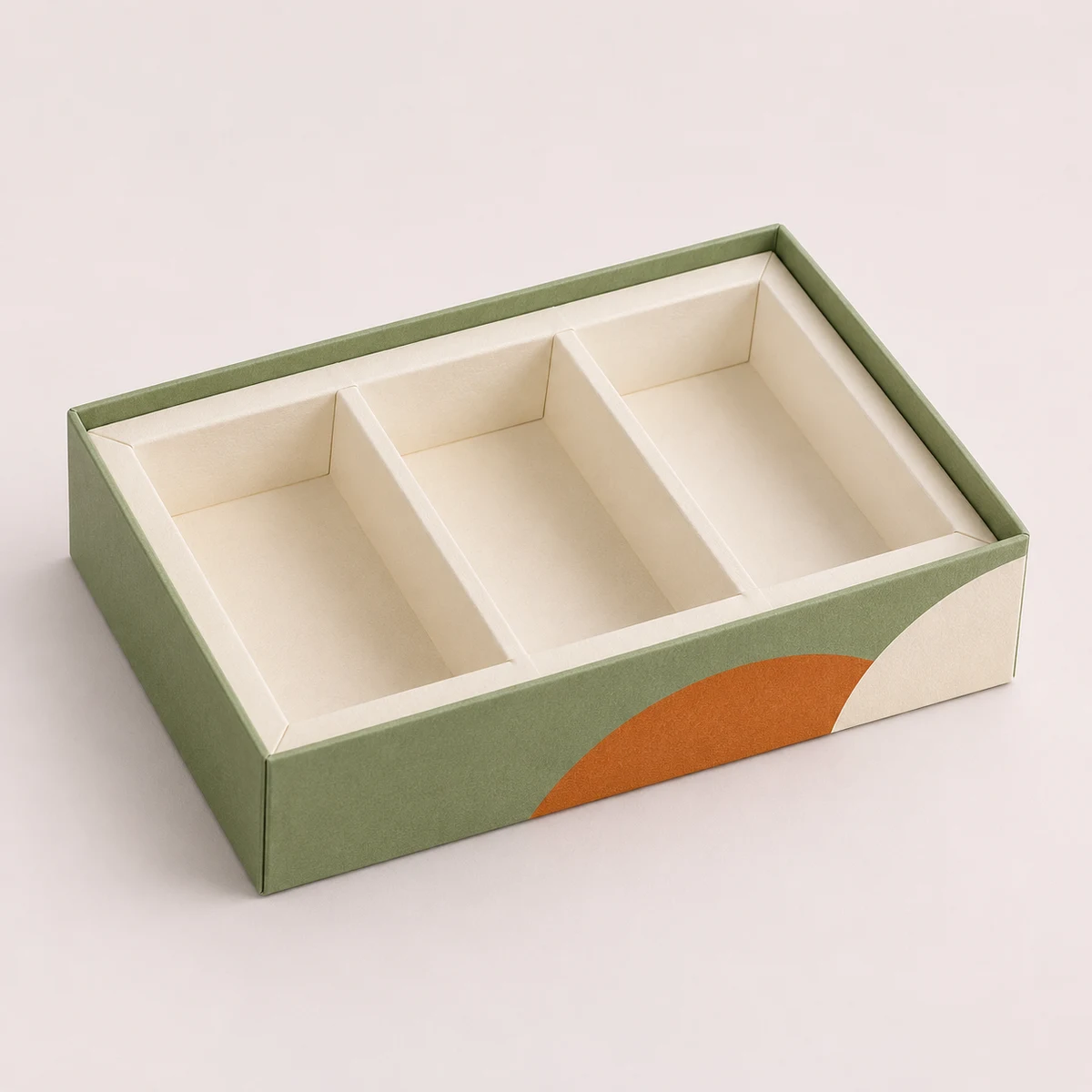
02 / Match the structure to the moment
A delivery, a shelf display and a gift each ask something different of a box. Use the comparison below as a starting point, then discuss the material, closure and protection needed for your particular product.
| Format | Where to start | What to review |
|---|---|---|
| Mailer box | Direct-to-customer deliveries and subscriptions | Closure, internal support and the complete shipping pack |
| Folding carton | Retail presentation and compact product ranges | Panel space, assembly and whether an outer shipper is needed |
| Rigid gift box | Presentation sets and a deliberate opening experience | Inner fit, lifting access, wrap finish and storage space |
03 / Design the opening, not just the outside
Follow the pack from assembly to the final reveal. A lid, sleeve or tray can frame the product without adding unnecessary layers. Keep the printed message close to the moment when the customer will see it.
Think about the person packing the order, too. Test whether the insert is easy to position and whether tissue or a seal can be applied consistently. A coherent pack should feel considered both when it is filled and when it is opened.

04 / Test the complete pack before approval
Place the actual product in a structural sample. Assemble it, close it, carry it and remove the contents. Check the surfaces, the fit and the space needed at the packing station.
For shipped products, agree how the complete pack will be assessed for the intended distribution route. A presentation box alone is not evidence of shipping protection. Record the approved dimensions and materials together so the next stage has a clear reference.